
Liquid Sachet Filling Machine
A liquid sachet filling machine doses liquid, paste or sauce into individual sealed sachets or pouches. Liquids run on the PP series with piston dosing — premade sachets, stand-up and spout pouches — while the JC four-side-seal platform stays on solid formats.
Liquids behave differently from powders
Liquid dosing is positive displacement — piston or peristaltic pumps push an exact volume into each sachet. Viscous products like ketchup and paste need piston filling with product heated or formulated to a pumpable viscosity.
Sealing is the second difference: liquid traps in the seal zone cause leakers, so liquid machines seal with longer dwell and often a double-seal profile, and nozzles drip-cut cleanly between doses.
Sachet or pouch for liquids
Premade sachets — unit doses of sauce, ketchup, shampoo, adhesive; the smallest per-dose cost format, filled on the PP series with piston dosing.
Stand-up pouches — retail sauce packs from 50 ml upward; run on the PP liquid machines like PP180FS and PP200F with piston dosing.
Spout pouches — drinkable and pourable products; the PP series seals through the spout fitting with adapted tooling.
Liquid Sachet Filling Machines from Path Pack
Modelos, formatos y velocidades actuales: cada tarjeta incluye un enlace a la página completa del equipo.
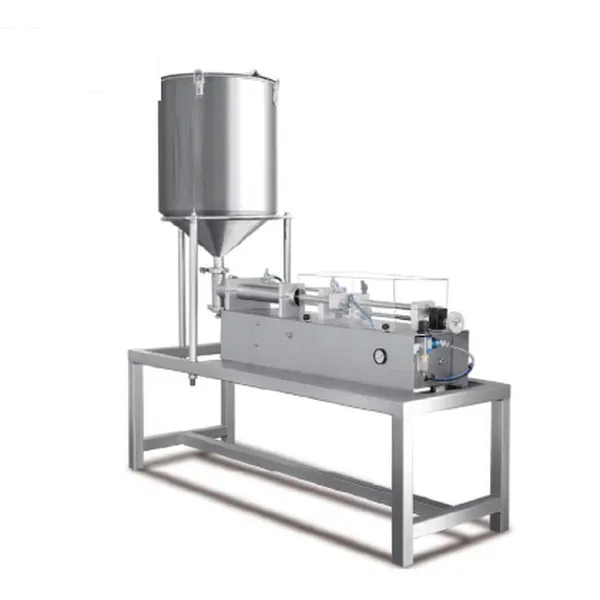
Piston Liquid Filling Machine
- Liquids and semi-liquids, no-drip nozzle
- Filling volume 30–5000 ml
- Speed 6–30 packs/min
- Fully pneumatic, ±1% accuracy
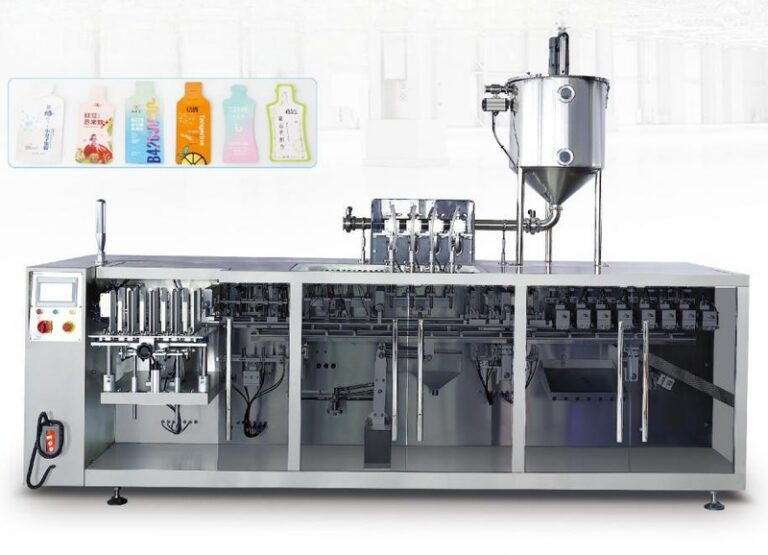
PP180FS Liquid Pouch Packing Machine
- Sauces, pastes and liquids in premade pouches
- Pouch width 50-90 mm
- Speed 160 bags/min
- Nivel Premium
The sauce and condiment application page covers the full format set for this product family, and the pouch packing page details the PP platform.
Cómo elegir
- Viscosity at filling temperature — measure it, do not estimate; piston sizing depends on the real number.
- Particles in the product — sauces with pieces need valve or piston pumps sized so pieces pass without damage.
- Dose volume range — one machine often runs several SKUs; check the dosing group covers your smallest and largest dose.
- Seal integrity testing — specify how you will verify seals (burst or vacuum test) during acceptance.
- Materials — food-contact product wetted parts in stainless are standard; confirm cleaning requirements between flavors.
Preguntas frecuentes
Can a sachet machine fill liquid, or only powder?
On the PP series, yes — liquid configurations use piston dosing with drip-cut nozzles instead of augers. The JC four-side-seal platform is built for solid formats and takes neither liquids nor powders.
What liquids can be filled into sachets?
Sauce, ketchup, honey, shampoo, lotion, adhesive, disinfectant — any pumpable product. Viscous products fill reliably; carbonated and highly aerated products need de-aeration first.
How do you keep liquid sachets from leaking?
Clean seal zone design, drip-cut nozzles, correct dwell time for the film structure, and seal testing during production. Our sauce application pages cover the practice in detail.
How much does a liquid sachet filling machine cost?
Dosing pump type, sachet size range and materials drive the price. Send your product viscosity and dose volume for a written quotation.
What is a sachet filling and sealing machine?
One machine that doses liquid into a sachet and closes it: the piston pump delivers the dose, and sealing jaws close the pack. The PP series does it for both unit-dose sachets and retail pouches with piston dosing.
Do you build sachet water packing machines?
Large water sachets — the half-liter pillow packs common in West Africa — are vertical form-fill-seal territory, which we do not build. Small liquid unit doses run on the PP series in premade sachets and pouches; tell us your dose volume and we say honestly which side of that line it falls on.
 English
 Spanish
 French
 German
 Korean
 Russian
 Italian
 Arabic